If a builder or architect has handed you a $100,000 smart home line item, you have a question. Is that reasonable, or am I being taken?
The honest answer is that $100,000 buys a serious system when it goes on the right things. Spent on the wrong things, it buys you a wall of expensive light switches.
This is what we mean.
Who this is for
Premium homeowners and builders mid-design. You are not asking should we have a smart home, you are asking what does competent look like at this price. You want a clear-eyed read of where the money goes, what it actually does, and what separates the work that lasts from the work that breaks the day the integrator leaves.
You are not the audience if your brief is "make all the lights work from my phone." That is a different conversation and a different price.
What $100K buys when it is done right
A serious system has a backbone before it has features. You pay for the backbone first or you regret it later.
For a typical premium build, $100,000 covers the foundation systems and the brains that hold them together. It does not cover lighting control, blinds, or HVAC integration. Those are separate.
A representative split looks like this.
Networking and WiFi: $10–15K. Properly designed, properly cabled, properly mounted. UniFi backbone, enterprise WiFi 6 access points, surveillance-grade switching. This is what lets every other system work for the next ten years.
Alarm: $5–10K. The Inception panel by Inner Range is our default. Australian made, locally serviceable, no overseas cloud dependency.
Cameras: $5–10K. UniFi Protect G5 cameras with local storage. No subscription. No silent cloud uploads of your front door.
Access control and intercom: $5–15K. Front gate, front door, mudroom door, garage. Treat it as one integrated system, not three disconnected products.
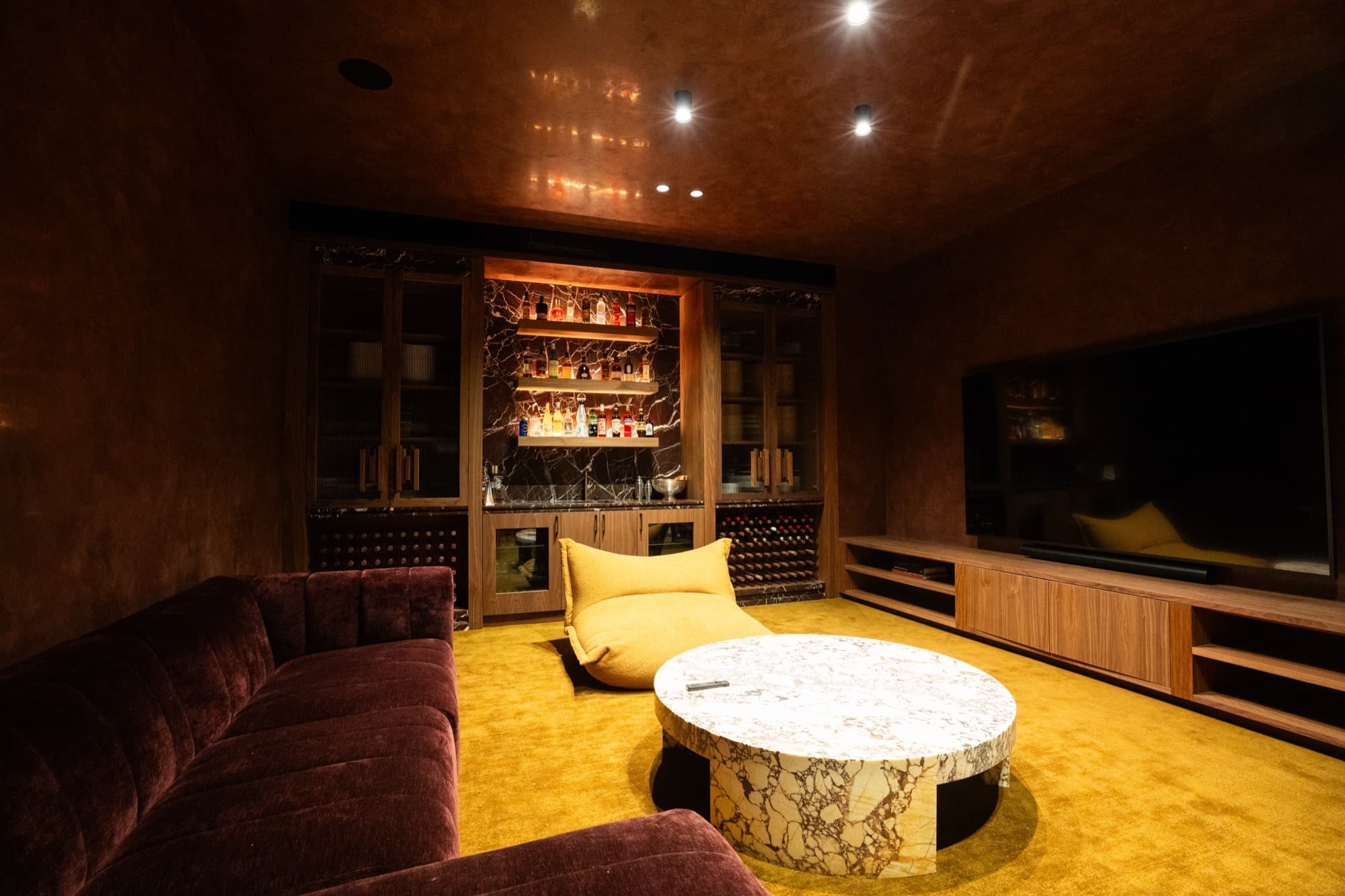
Audiovisual base: from $7K for a single Sonos surround in a media room. Multi-zone audio through the whole house is a separate budget. A serious home cinema starts at $52K and climbs from there.
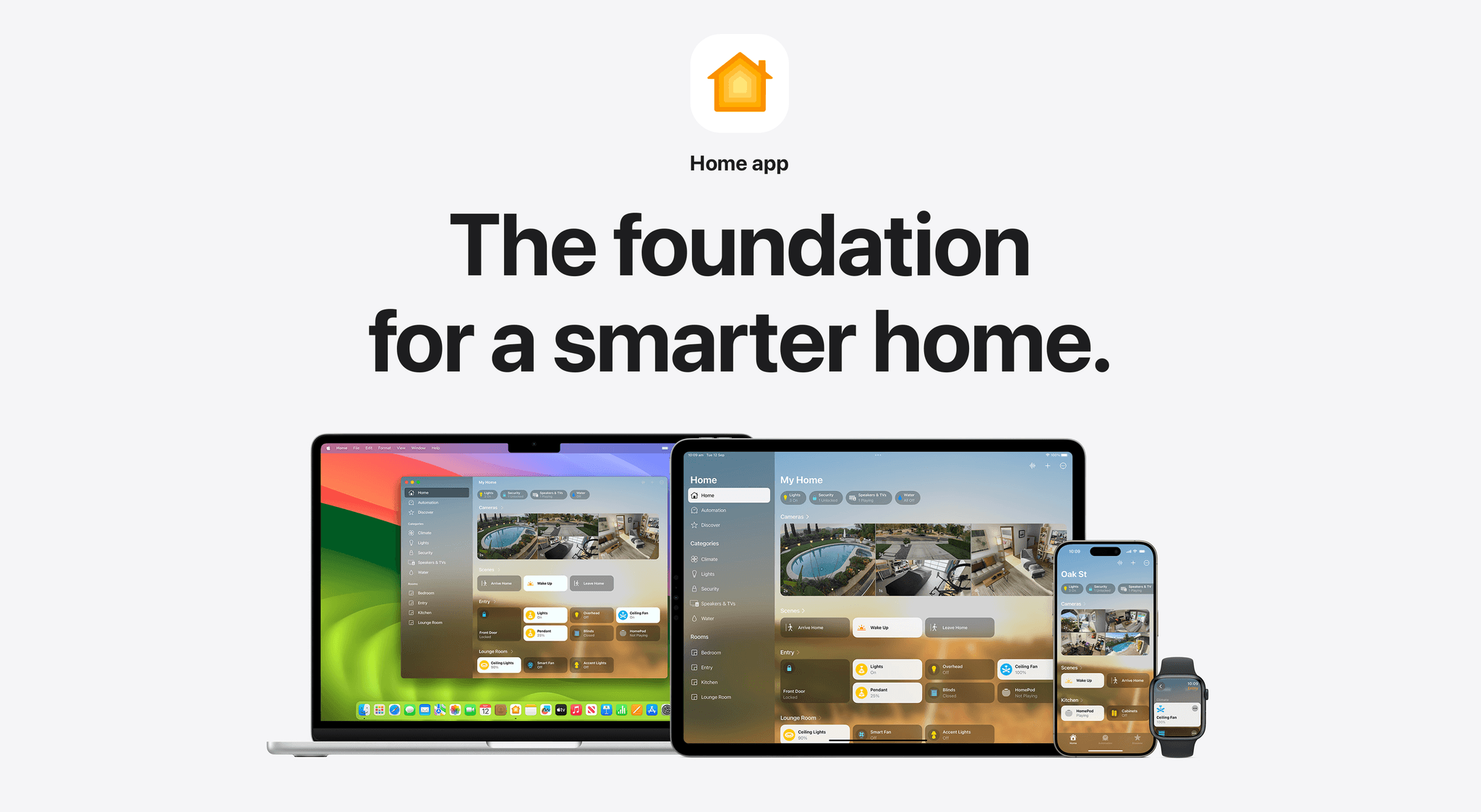
Apple Home backend: enough programming time to make Apple Home behave like an actual platform instead of a hobby, plus the hardware that holds it together. Apple TV, Home Assistant server, a KNX gateway when there is lighting to integrate.
That is your $100K. Foundation systems. No lighting. No blinds. No climate.
Where the real money goes
Most people think they are paying for the gear. They are not.
They are paying for the programming hours that make twenty systems behave like one. They are paying for the design time that decides where every switch and sensor sits before a single cable is pulled. They are paying for the handover document that proves what was installed and how to use it. They are paying for the return visits over the next six months, when scenes get refined and corner cases get fixed.
On a recent Albert Park build we proposed, the original automation and AV scope came in at $330,000. The builder pushed back. We brought it down to $265,000 to land near competing quotes.
What got removed is what most homeowners never see in a comparison spreadsheet. We did not strip out the programming hours. We did not cheapen the brain. We took out WiFi access points, data points, a portion of the motion sensors, several keypads, automated blinds, and the UPS and backup systems that keep everything alive in a power event.
The result is still a serious system. It is also a smaller, less resilient one. That is the trade. You only see it in five years when something blacks out and the rest of the house does too.
If you compare a $100K quote to one of these to a $330K version of the same scope, ask which lines disappeared. The honest answer separates the integrators.
When $100K is the wrong number
Under-spec. A 600-square-metre new build with lighting control, blinds, multi-zone audio, a home cinema and full HVAC integration is not a $100K job. It is a $250–400K job done properly. If someone is quoting $100K for that scope they are leaving something out, and you will find out which thing at handover.
Over-spec. A modest renovation with a few smart switches, a doorbell, and some networking does not need $100K. $40–60K is enough.
The danger zone is the middle. A brief that wants lighting and security and audio and cameras and HVAC integration, all shoehorned into a $100K number. That is where you end up with an extremely unreliable system, because no single layer was funded properly.
Where lighting and blinds actually start
We get asked this constantly.
A standard premium automation switch lands at around $1,500 installed, all in. That covers hardware, cabling, back box, labour, and the programming time to make it behave as part of a scene. A Basalte switch, with the kind of finish you want on a $4M home, lands closer to $3,000 installed.
A serious home has dozens of these switches across the floor plate.
That is $40,000 to $60,000 just on switches.
Add the rest of the lighting layer. The KNX backbone, relay blocks, dimming channels, the DALI gateway that handles the lighting protocol. The lighting infrastructure alone lands in the $75,000 to $100,000 range when you include blind automation.
And that is just the equipment in the board. It does not include the sub-circuit cabling the site electrician runs out to every fitting. The cable to every downlight, every blind motor, every keypad. That is a separate line on a separate quote.
This is the part most quotes skip. We do not.
The difference between a smart home and expensive light switches
This is the part to read twice.
Not all integrators are the same. Yes, they have the licence. Yes, they can install the bits. The real art is in the initial design and the after-service care.
Is the system designed to be self-healing and reliable? Does it have battery backup. Does it have long-term integration thought through. Or is it a wall of features that all happen to be in the same house, none of them really talking to each other.
Are you paying for an automation system that senses and manoeuvres around you, or are you paying for a bunch of expensive light switches that sit on the wall?
A lot of these homes are the second thing. Beautiful keypads, no actual programming. The lights turn on when you push them. They do not turn on when you walk in. They do not turn off when the room empties. They do not dim when the sun hits the western windows. They are not a smart home. They are a home with fancy switches.
The difference between the cheap guy and the proper guy is the programming budget. The cheap guy smacks switches on the wall and calls it done. The proper integrator allocates a serious programming budget, knows there will be return visits to refine scenes, and writes those return visits into the proposal upfront.
You want a smart home, not a home with fancy light switches.
If that distinction matters to you, we should talk early in your build.
If you want to understand the platform that sits underneath all of this, read Apple Home as a serious platform and our field guide on KNX in Melbourne residential builds.
Tags